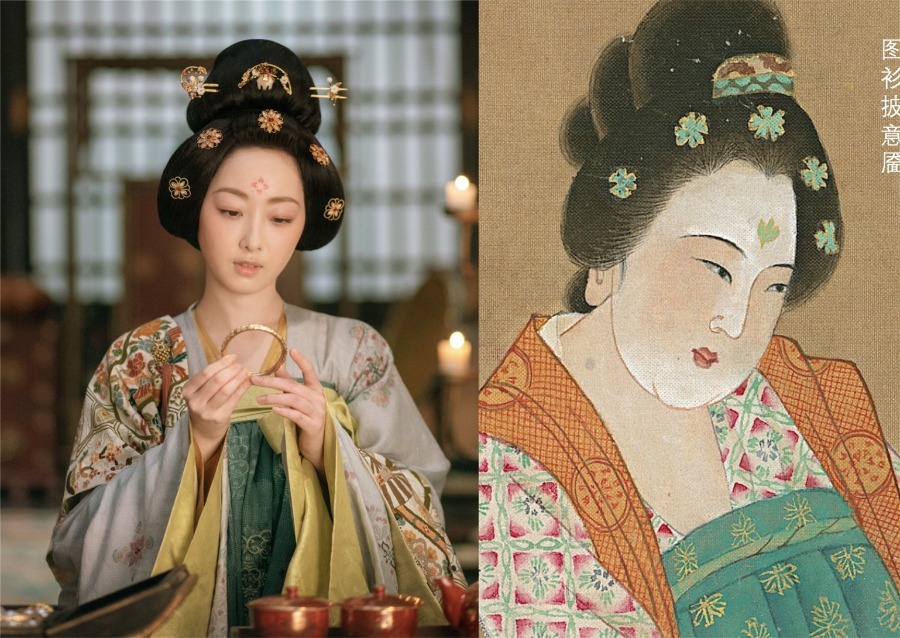
Tang Dynasty Painting
Introduction
Tang Dynasty painting refers to the art form that flourished in China during the Tang Dynasty, which lasted from 618 to 907. This era is recognized as one of the most prosperous periods in Chinese history, characterized by cultural openness, artistic innovation, and economic prosperity. Painting from this period is highly valued for its aesthetic beauty, technical skill, and the diversity of themes depicted. Tang Dynasty paintings often capture the elegance of court life, the charm of landscapes, and the vitality of everyday scenes. This art form is notable for its integration of different influences, including Buddhist, Taoist, and Confucian themes, which reflect the cultural exchanges and the cosmopolitan nature of the Tang period.
Historical Background
The Tang Dynasty is often regarded as a golden age for Chinese art, including painting. The capital city of Chang'an was a thriving cultural hub, drawing artists, poets, and scholars from across Asia. The openness of the Tang court to external influences facilitated the importation of artistic techniques and ideas from other regions, including Central Asia, India, and the Middle East. This period saw the development of new painting techniques, such as ink wash painting, which allowed for greater expression and subtlety in artworks. The flourishing of Buddhism during the Tang Era also had a profound impact on the arts, as Buddhist themes became prevalent in paintings and frescoes, exemplifying religious narratives and spiritual ideals.
Characteristics of Tang Dynasty Paintings
Tang Dynasty paintings are distinguished by their vivid colors, sophisticated composition, and the dynamic portrayal of subjects. Artists of this era placed a strong emphasis on realism and detail, particularly in figure painting, which was used to depict court life, historical narratives, and religious themes. The paintings often featured bright mineral-based pigments, which have preserved their vibrancy over the centuries. Tang painters excelled in capturing the texture of textiles, the intricate details of architectural elements, and the natural beauty of landscapes. This realism was complemented by an idealized elegance and grace, particularly in the portrayal of human figures, which were often depicted with full, rounded forms illustrating the Tang ideal of beauty.
Styles and Themes
The styles and themes of Tang Dynasty paintings varied widely, reflecting the diverse interests and artistic pursuits of the time. Landscape painting (山水画) began to emerge as a distinct genre, portraying the majesty of mountains and rivers as symbols of the natural world and man's place within it. However, figure painting remained the dominant style, with artists depicting scenes from court life, historical events, and famous stories. Portraits of emperors, nobles, and scholars were common, often imbued with symbolic meaning. Another significant theme was religious imagery, with Buddhist and Taoist subjects frequently appearing in murals and scrolls. The influence of Central Asian art introduced new stylistic elements such as the use of perspective and dynamic compositions, which were seamlessly integrated into the traditional Chinese aesthetic.
Notable Artists and Their Works
Several renowned artists emerged during the Tang Dynasty, each contributing uniquely to the evolution of Chinese painting. One of the most celebrated artists was Wu Daozi, known as the "Sage of Painting," who was famed for his murals and figure paintings that exhibited a remarkable fluidity and vitality. Another prominent figure was Zhang Xuan, recognized for his elegant depictions of court ladies, exemplified by his masterpiece "Court Ladies Preparing Newly Woven Silk." Han Gan was another influential artist, particularly known for his skill in painting horses, which were a favored subject during the Tang period due to their cultural and symbolic significance. These artists, among others, laid the groundwork for future Chinese painting, influencing subsequent generations and leaving a lasting legacy on the art world.
Influence on Later Art
The painting styles and techniques developed during the Tang Dynasty had a profound influence on the art of subsequent periods in China and beyond. The emphasis on realism and the integration of naturalism in Tang paintings paved the way for the development of landscape painting during the Song Dynasty. Tang artistic principles also traveled along the Silk Road, influencing the art of neighboring cultures. Japanese Yamato-e paintings, for instance, were heavily inspired by Tang artistic techniques. The legacy of Tang painting is evident in the continued reverence for its masterpieces, which are studied and emulated by artists and connoisseurs alike.
Preservation and Exhibition
Many Tang Dynasty paintings have survived to present day, preserved in museums and private collections around the world. The Dunhuang Mogao Caves house an extensive collection of Tang murals, offering valuable insights into the religious and cultural life of the period. These paintings are meticulously conserved to protect their vibrant hues and intricate details. Notable institutions such as the Palace Museum in Beijing and the National Museum of China in Xi'an hold significant collections of Tang paintings, making them accessible to scholars and the public. Exhibitions of Tang art are frequently organized, both in China and internationally, allowing appreciation and study of this rich artistic heritage. Preservation efforts continue to be a priority, ensuring that future generations can experience the beauty and historical significance of Tang Dynasty painting.








